Spotting students who are slipping, before the marks do
A struggling student usually shows it in small ways first. They stop opening the course page. A quiz goes unattempted, then an assignment comes in late, then not at all. By the time a mark shows the problem, it has usually been building for weeks.
That matters in South Africa. Audited data from six institutions found that only 11% to 31% of students finished a three-year qualification in three years. Some of those students finish later and some leave, and every extra year costs the student, their family and the institution.
The signals are already there
If your institution runs Moodle or another LMS, it already records most of what a lecturer would notice if they had time to watch every student:
- Engagement: when a student last logged in, and whether their activity is dropping compared with earlier weeks.
- Submissions: missed or late assignments and quizzes.
- Marks: a downward trend, even while the average still looks like a pass.
Each one is weak alone. Read together, they show which students have quietly fallen behind.
A flag is only useful if it says why
A lecturer can act on a plain reason: last logged in 12 days ago, missed two of the last three submissions. They can also spot a false alarm, such as a student who was sick and already arranged an extension. A bare "high risk" score gives them nothing to work with.
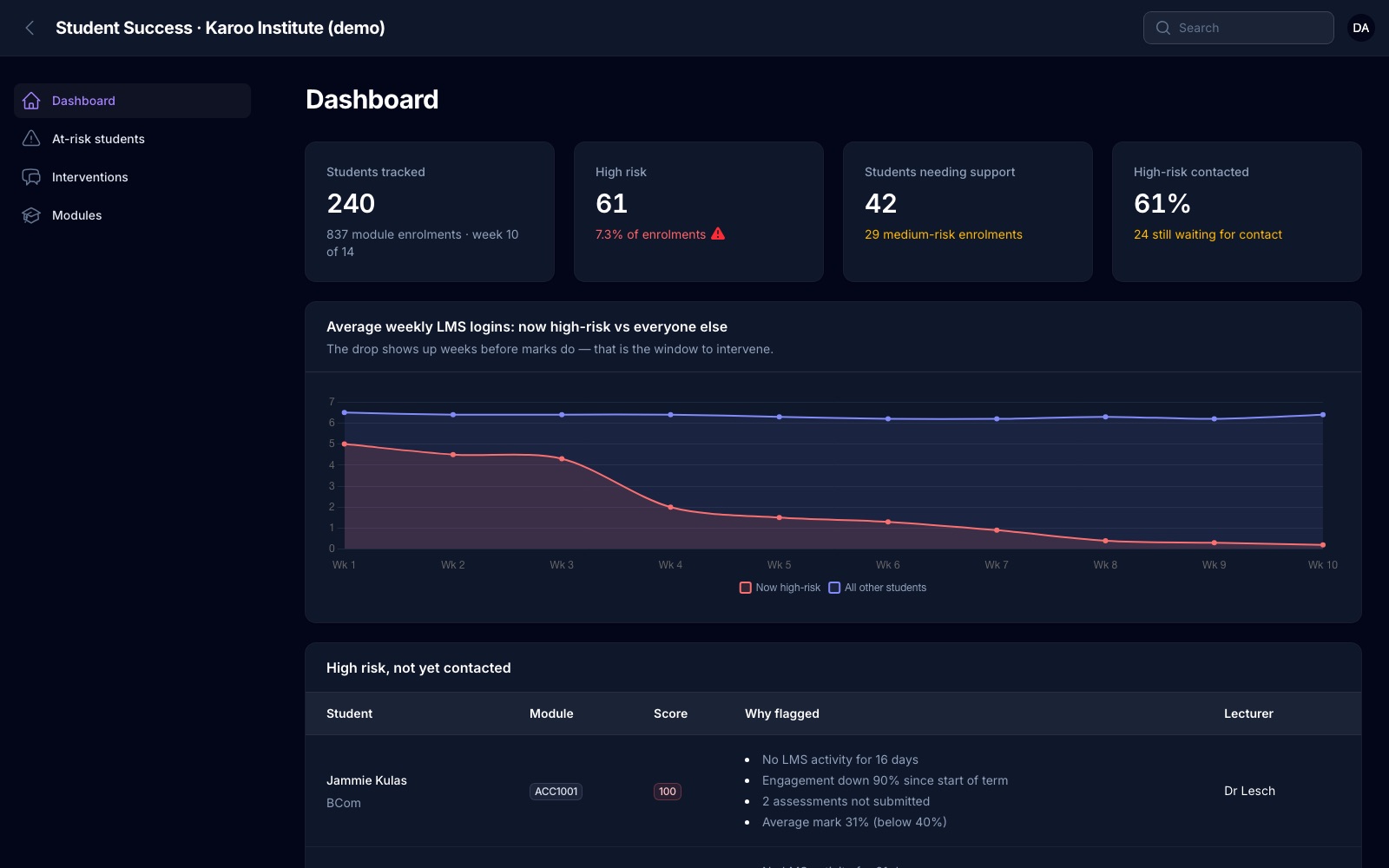
So in the Student Success dashboard we're building, every flag comes with its reasons in plain language. The flag is a prompt to check in with the student, and the lecturer decides what it means.
What we deliberately leave out
Race, gender, home language, school background and funding status can all correlate with outcomes. Feed them into a tool like this and it starts flagging students for their circumstances, which they can't change.
Our rule is to use no demographics at all. The flags come only from course activity, submissions and marks, which a student can change. It also keeps the system easier to defend under POPIA, because it processes less personal information.
Closing the loop
Finding at-risk students is the easy half. The other half is making sure someone actually reaches them. Each flagged student shows whether a lecturer or tutor has checked in, when, and what came of it. A student flagged three weeks running with no check-in logged stands out straight away.
Try it
The demo runs on made-up students at a fictional college. The login is filled in for you and the data resets every night, so click around freely. If you'd like to see it working with your own Moodle courses, get in touch.